
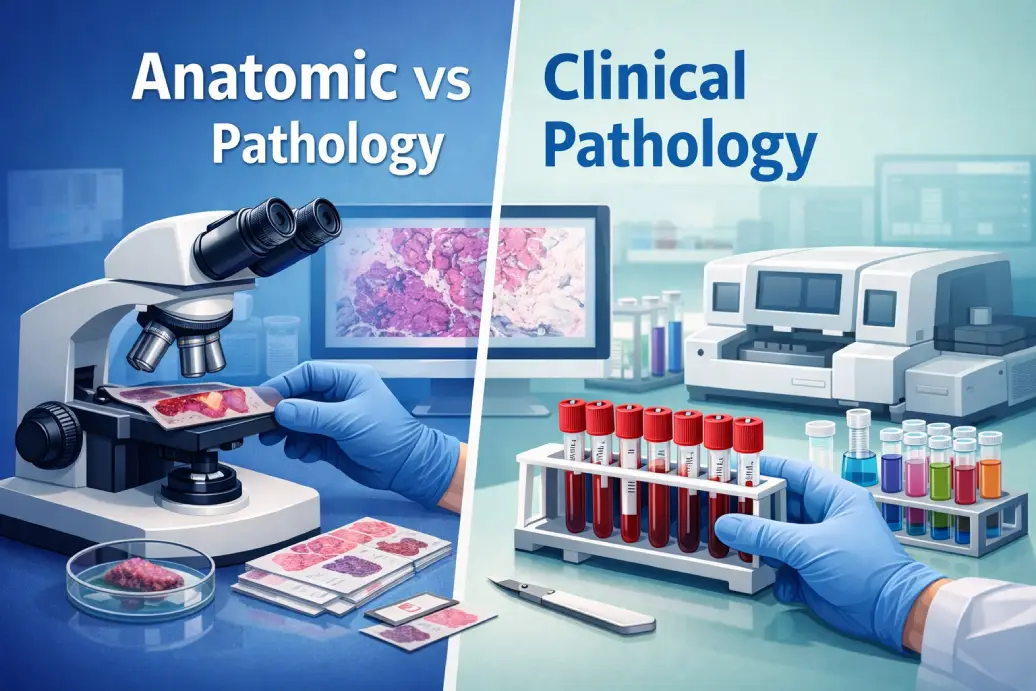
Pathology is the backbone of modern medicine. Every accurate diagnosis, treatment plan, and clinical decision relies heavily on pathology findings. However, many healthcare professionals, administrators, and even patients often ask an important question: What is the difference between anatomic pathology and clinical pathology?
Although both disciplines fall under the umbrella of pathology, they serve distinct purposes, workflows, and diagnostic approaches. Understanding these differences is crucial for clinicians, laboratory managers, and healthcare organizations aiming to optimize lab operations and patient outcomes.
In this guide, we break down the key differences between anatomic and clinical pathology, explain how each functions, and highlight their real-world clinical applications.
What Is Pathology?
Pathology is the medical specialty that studies diseases by examining organs, tissues, cells, and bodily fluids. It bridges the gap between laboratory science and clinical care by identifying the cause, progression, and effects of disease.
Pathology is broadly divided into two major branches:
- Anatomic Pathology (AP)
- Clinical Pathology (CP)
Each plays a unique role in diagnosis and patient management.
What Is Anatomic Pathology?
Definition of Anatomic Pathology
Anatomic pathology focuses on the structural examination of tissues and organs to diagnose disease. It involves analyzing samples removed during biopsies or surgeries to detect abnormalities at the gross, microscopic, and molecular levels.
Key Areas of Anatomic Pathology
Anatomic pathology includes several subspecialties:
1. Surgical Pathology
- Examination of tissue removed during surgery
- Common in cancer diagnosis and staging
2. Histopathology
- Microscopic study of stained tissue sections
- Helps identify cellular architecture and disease patterns
3. Cytopathology
- Evaluation of individual cells or small clusters
- Examples: Pap smears, FNAC (Fine Needle Aspiration Cytology)
4. Dermatopathology
- Specialized diagnosis of skin diseases
5. Molecular & Genetic Pathology
- DNA, RNA, and protein analysis
- Used in personalized and precision medicine
Common Tests in Anatomic Pathology
- Biopsy examinations
- Tumor grading and staging
- Immunohistochemistry (IHC)
- Frozen sections
- Resection margin analysis
What Is Clinical Pathology?
Definition of Clinical Pathology
Clinical pathology (also known as laboratory medicine) focuses on the analysis of bodily fluids to detect disease, monitor therapy, and assess overall health.
Unlike anatomic pathology, it emphasizes quantitative data and automated testing rather than tissue structure.
Key Areas of Clinical Pathology
Clinical pathology is divided into several laboratory disciplines:
1. Hematology
- Blood cell analysis
- CBC, coagulation studies
2. Clinical Chemistry
- Biochemical analysis of blood and urine
- Glucose, electrolytes, liver and kidney function tests
3. Microbiology
- Detection of infectious agents
- Bacteria, viruses, fungi, parasites
4. Immunology & Serology
- Immune response evaluation
- Autoimmune disorders, allergies
5. Blood Banking & Transfusion Medicine
- Blood grouping and crossmatching
Common Tests in Clinical Pathology
- Complete Blood Count (CBC)
- Blood glucose levels
- Urinalysis
- Culture and sensitivity tests
- Hormone and enzyme assays
Key Differences Between Anatomic and Clinical Pathology
| Aspect | Anatomic Pathology | Clinical Pathology |
|---|---|---|
| Focus | Structure of tissues and organs | Chemical and cellular composition of fluids |
| Sample Type | Tissues, biopsies, cells | Blood, urine, serum, body fluids |
| Diagnostic Approach | Microscopic and morphological | Quantitative and analytical |
| Automation Level | Moderate | High |
| Turnaround Time | Longer (hours to days) | Faster (minutes to hours) |
| Common Use Cases | Cancer diagnosis, tissue abnormalities | Disease screening, monitoring, infection detection |
How Anatomic and Clinical Pathology Work Together
Although distinct, anatomic and clinical pathology are deeply interconnected. Most complex diagnoses require data from both disciplines.
Example: Cancer Diagnosis
- Anatomic pathology confirms tumor type, grade, and margins
- Clinical pathology monitors tumor markers, blood counts, and treatment response
Example: Autoimmune Disorders
- Anatomic pathology evaluates tissue inflammation
- Clinical pathology measures antibodies and immune markers
Together, they provide a complete diagnostic picture, enabling accurate treatment planning.
Role of Technology in Modern Pathology
Advancements in digital pathology, laboratory automation, and Lab Information Systems (LIS) have transformed both anatomic and clinical pathology.
In Anatomic Pathology
- Digital slide scanning
- AI-assisted image analysis
- Structured pathology reporting
- Synoptic cancer reporting
In Clinical Pathology
- Automated analyzers
- Real-time result validation
- Rule-based reflex testing
- High-volume sample processing
A unified pathology LIS ensures seamless integration between AP and CP workflows, improves turnaround time, and reduces diagnostic errors.
Career Paths in Anatomic vs Clinical Pathology
Anatomic Pathologists
- Specialize in tissue-based diagnosis
- Often focus on oncology, dermatology, or molecular pathology
- Heavy involvement in surgical case reviews
Clinical Pathologists
- Oversee laboratory operations and test quality
- Work closely with clinicians on test selection and interpretation
- Manage automation and lab efficiency
Some professionals pursue combined AP/CP training for broader expertise.
Which Is More Important: Anatomic or Clinical Pathology?
Neither is more important—they serve different but equally essential roles.
- Anatomic pathology answers “What is the disease?”
- Clinical pathology answers “How is the body responding?”
Modern healthcare relies on the synergy of both to deliver precise, timely, and effective patient care.
FAQs: Anatomic vs Clinical Pathology
Q. Is histopathology the same as anatomic pathology?
No. Histopathology is a subspecialty within anatomic pathology focused on microscopic tissue analysis.
Q. Can one lab handle both AP and CP?
Yes. Many advanced laboratories operate integrated AP and CP departments using a centralized LIS.
Q. Which pathology branch is more automated?
Clinical pathology is generally more automated, while anatomic pathology requires expert interpretation.
Q. Do cancer diagnoses require both?
Yes. Most cancer cases rely on anatomic pathology for diagnosis and clinical pathology for monitoring and treatment evaluation.
Final Thoughts
Understanding the difference between anatomic pathology and clinical pathology is essential for healthcare providers, lab managers, and diagnostic organizations. While their methods and samples differ, both disciplines are indispensable in delivering accurate diagnoses and improved patient outcomes.
As pathology continues to evolve with digital tools and automation, the integration of AP and CP workflows will play a critical role in shaping the future of diagnostic medicine.