
Abstract
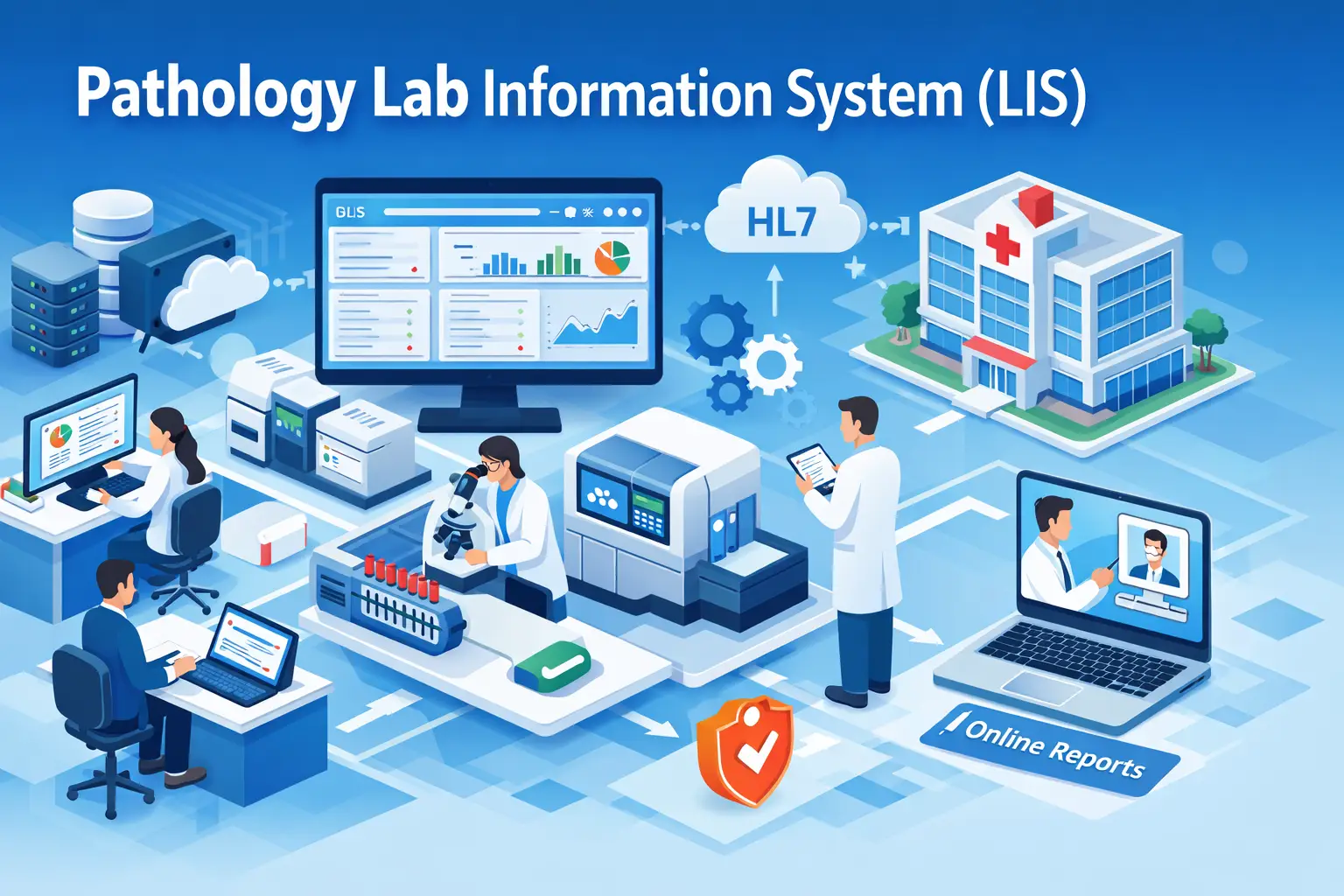
A Pathology Lab Information System (LIS) is software that manages laboratory operations such as patient data, sample tracking, test workflows, report generation, billing, and integrations with EHR systems. In 2026, modern LIS platforms are cloud-based, HL7-enabled, automation-ready, and compliance-focused helping pathology labs improve accuracy, turnaround time, scalability, and patient experience.
Introduction:
A Pathology Lab Information System (LIS) is no longer a luxury for diagnostic labs it is a necessity. As pathology workflows become more complex and patient expectations rise, labs need technology that ensures accuracy, speed, compliance, and seamless data exchange.
In this guide, we’ll explain what a Pathology LIS is, how it works, its features, benefits, integrations, and future trends, helping labs make informed decisions in 2026 and beyond.
What Is a Pathology Lab Information System (LIS)?
A Pathology Lab Information System (LIS) is specialized software designed to manage end-to-end laboratory operations. It handles patient data, test orders, sample tracking, result validation, reporting, billing, and integrations with other healthcare systems.
Unlike manual or semi-digital workflows, an LIS automates lab processes, reduces errors, and improves turnaround time while ensuring regulatory compliance.
Definition: Lab Information System (LIS) in Pathology Laboratories
A Pathology Lab Information System (LIS) is a healthcare software solution designed to automate and manage pathology laboratory workflows, including patient registration, sample accessioning, test processing, result validation, reporting, billing, and system integrations.
An LIS replaces manual and fragmented processes with a centralized digital system that ensures accuracy, traceability, and efficiency across lab operations.
Who Uses a Pathology Lab Information System (LIS)?
A Pathology Lab Information System is designed to support a wide range of diagnostic environments, each with unique operational needs.
- Independent pathology laboratories
- Diagnostic centers
- Hospital-based laboratories
- Multi-location lab networks
- Specialty testing and reference labs

1. Independent Pathology Laboratories
Independent labs handle high test volumes while operating with limited staff and resources. An LIS helps streamline patient registration, sample tracking, and reporting, enabling these labs to operate efficiently without manual errors. It also supports scalability as test volumes grow.
2. Diagnostic Centers
Diagnostic centers offering pathology, radiology, and health checkups rely on LIS to manage multiple services under one system. LIS ensures seamless coordination between departments, faster report generation, and integration with billing and patient portals.
3. Hospital-Based Laboratories
Hospital labs require tight integration with Electronic Health Records (EHRs) to support inpatient and outpatient care. An LIS enables real-time data exchange with hospital systems, ensures compliance, and supports faster clinical decision-making.
4. Multi-Location Lab Networks
Large lab chains operating across cities or regions need centralized control with local flexibility. A cloud-based LIS allows centralized reporting, standardization of workflows, and real-time monitoring across multiple branches.
5. Specialty Testing and Reference Labs
Specialty labs handling histopathology, molecular diagnostics, or genetic testing benefit from LIS features like complex workflow handling, extended reporting formats, and advanced quality control mechanisms.
Why Pathology Labs Need an LIS in 2026
Pathology labs in 2026 face growing pressure to deliver faster, more accurate, and compliant diagnostic services. Increasing test volumes, digital health adoption, and patient expectations make manual or semi-digital systems inefficient and risky.
An LIS enables labs to modernize operations, reduce errors, and stay competitive while meeting regulatory and technological demands.
Challenges Without an LIS
Without a Lab Information System (LIS), pathology labs face inefficiencies across data entry, sample tracking, reporting, compliance, and system integration leading to errors, delays, and operational risk.
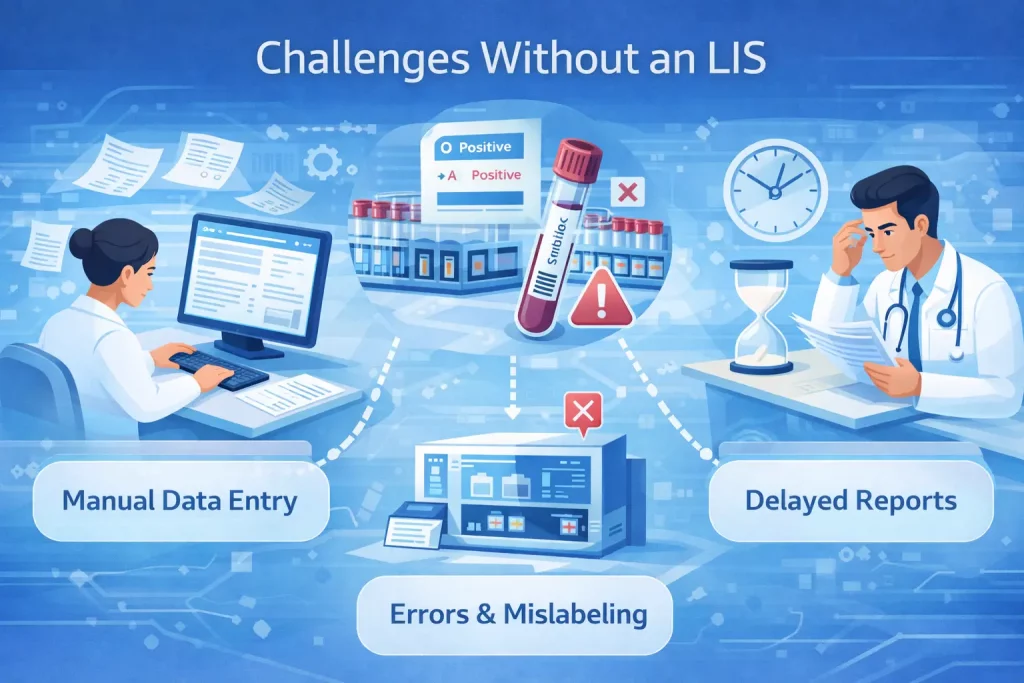
As a result, labs commonly face the following challenges:
1. Manual Data Entry Errors
Without an LIS, labs rely heavily on manual data entry, increasing the risk of patient identification errors, incorrect test mapping, and reporting mistakes that can impact diagnosis.
2. Delayed Report Turnaround Time
Manual workflows slow down sample processing and result validation, leading to delayed reports and dissatisfaction among doctors and patients.
3. Poor Sample Traceability
Tracking samples manually increases the risk of misplacement, duplication, or mix-ups, especially in high-volume labs.
4. Compliance and Audit Risks
Labs without proper digital records struggle during audits and inspections, risking non-compliance with NABL, CAP, HIPAA, or local regulations.
5. Limited Integration with Hospital Systems
Disconnected systems lead to duplicate data entry, fragmented records, and inefficient coordination between labs and healthcare providers.
How an LIS Solves These Challenges
A Pathology LIS addresses operational pain points by digitizing and automating lab workflows.
- Automates end-to-end lab workflows, reducing dependency on manual processes
- Improves accuracy and data integrity through standardized data entry and validation
- Reduces turnaround time (TAT) by streamlining sample-to-report cycles
- Enables secure data sharing with doctors, hospitals, and patients
- Enhances patient and doctor experience through faster, error-free reporting
Key Features of a Modern Pathology LIS
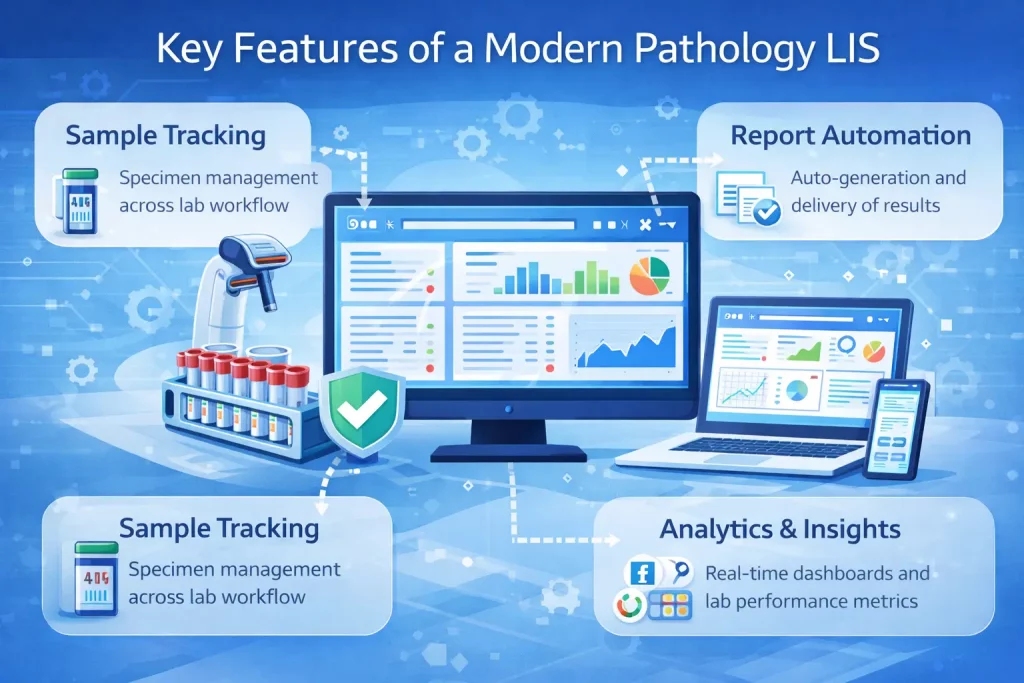
A modern Pathology Lab Information System (LIS) is designed to digitize, automate, and standardize laboratory workflows. Its features focus on improving accuracy, efficiency, compliance, and scalability across all stages of pathology operations.
Core LIS Features
- Patient Registration and Test Order Management: Centralized patient records with accurate test mapping reduce duplication and errors.
- Sample Accessioning and Barcode Tracking: Barcoding ensures each sample is uniquely identified and traceable throughout the workflow.
- Test Workflow Monitoring: Real-time status tracking allows labs to identify bottlenecks and optimize operations.
- Automated Report Generation: Standardized, error-free reports are generated quickly, improving efficiency and consistency.
- Quality Control and Audit Logs: Built-in audit trails help labs maintain compliance and transparency.
- Billing and Invoicing: Integrated billing reduces manual reconciliation and improves financial accuracy.
Advanced LIS Features (2026-Ready)
- Cloud-Based Deployment: Allows remote access, scalability, and lower infrastructure costs.
- Multi-Location Lab Management: Centralized dashboards with branch-level control support lab networks.
- AI-Assisted Diagnostics Support: AI tools assist in pattern recognition and reporting accuracy (decision support, not replacement).
- Mobile Access for Doctors and Lab Staff: Enables report review and approvals from anywhere.
- Analytics Dashboards and Reporting: Provides insights into test volumes, turnaround times, and operational performance.
How Does a Pathology Lab Information System Work?
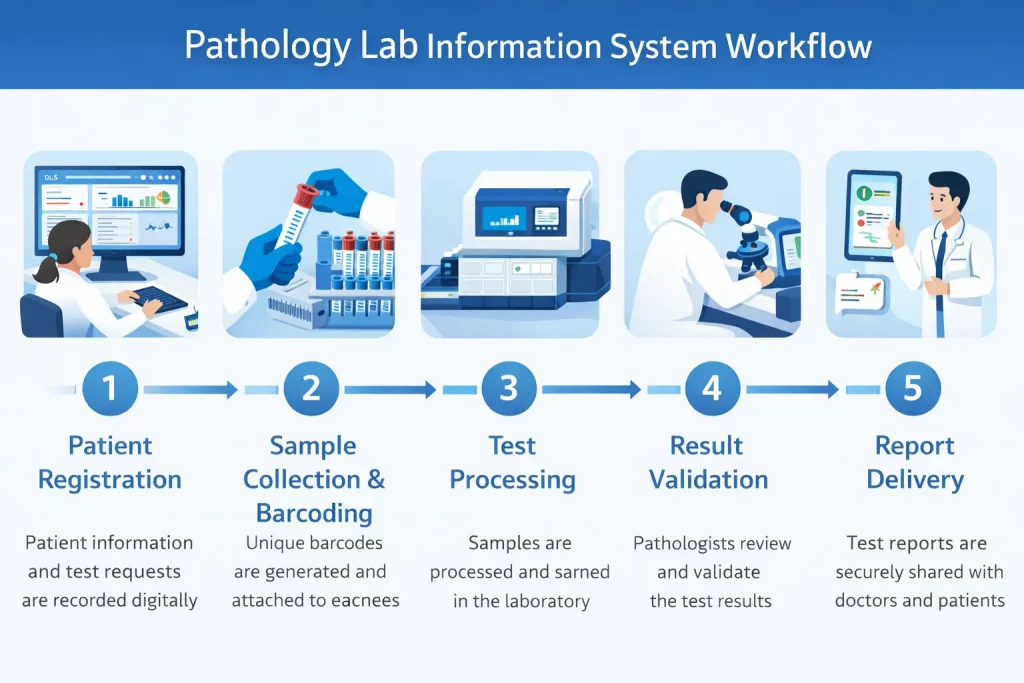
A Pathology LIS follows a structured digital workflow to ensure efficiency and accuracy.
- Patient Registration: Patient demographics and test requests are digitally recorded.
- Sample Collection & Barcoding: Each sample receives a unique barcode to prevent identification errors.
- Test Processing: Samples move through predefined workflows aligned with lab protocols.
- Result Validation: Pathologists review, verify, and approve results digitally.
- Report Delivery: Reports are securely delivered to doctors and patients via portals or notifications.
This structured workflow minimizes delays, errors, and manual dependencies.
LIS Integration Capabilities
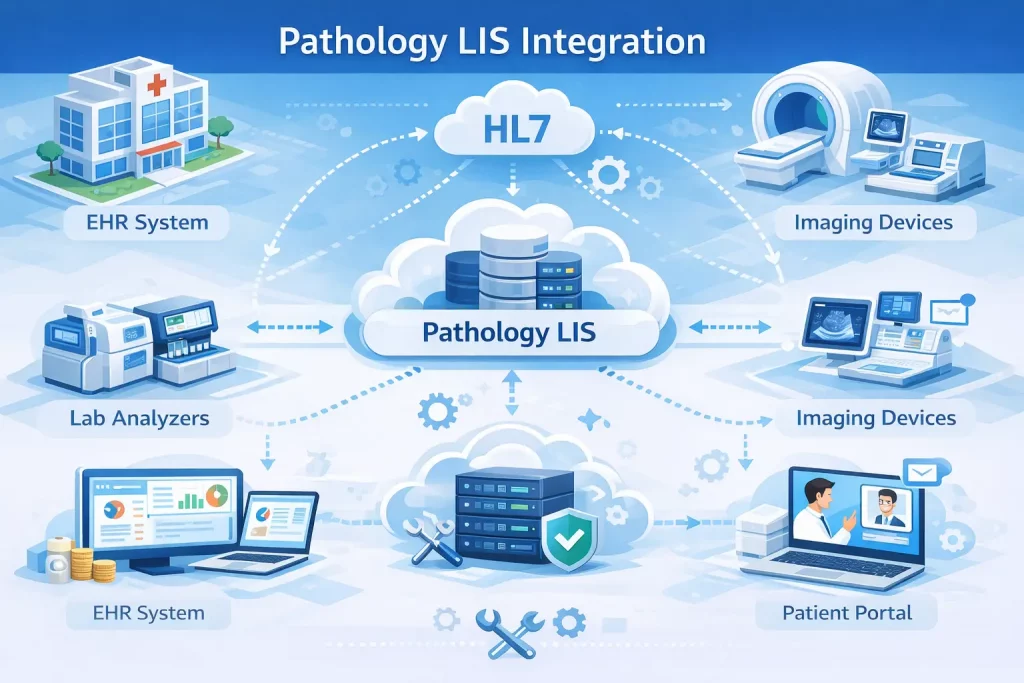
Integration is a critical component of a modern LIS, enabling seamless data exchange between laboratories, hospitals, diagnostic devices, and patients. A well-integrated LIS eliminates data silos and supports coordinated, end-to-end healthcare delivery.
1. LIS and EHR Integration
Using HL7 standards, LIS integrates seamlessly with EHR systems, enabling:
- Accurate patient data exchange
- Elimination of duplicate data entry
- Improved clinical continuity and coordination
2. LIS with Lab Instruments and Imaging
Direct integration with analyzers and imaging systems allows:
- Automated result capture
- Faster processing
- Reduced manual intervention and errors
3. Patient Portal Integration
Patient portals enable:
- Online access to lab reports
- Email and SMS notifications
- Greater transparency and patient trust
Benefits of Using a Pathology Lab Information System
Implementing a Pathology Lab Information System delivers measurable operational, clinical, and financial benefits for laboratories of all sizes.
1. Faster and More Reliable Report Turnaround
An LIS automates sample tracking, test workflows, and report generation, significantly reducing turnaround time. Faster reports enable quicker clinical decisions, improving patient outcomes and strengthening relationships with doctors and hospitals.
2. Lower Operational and Administrative Costs
By reducing manual data entry, paperwork, and repetitive tasks, an LIS lowers staffing overhead and minimizes rework caused by errors. Automation also optimizes resource utilization across lab operations.
3. Improved Diagnostic Accuracy
Barcode-based sample identification, standardized workflows, and validation checkpoints reduce human errors. This leads to more accurate test results and increased trust among clinicians and patients.
4. Higher Patient Satisfaction
Digital report delivery, faster turnaround times, and transparent communication enhance the overall patient experience. Patient portals further improve convenience and accessibility.
5. Stronger Data Security
Modern LIS platforms include role-based access control, encryption, audit logs, and secure data storage, ensuring sensitive health information remains protected against unauthorized access.
6. Regulatory Compliance (NABL, CAP, HIPAA)
An LIS helps labs meet regulatory and accreditation requirements by maintaining traceable records, audit trails, quality control logs, and standardized reporting formats.
Cloud-Based LIS vs On-Premise LIS
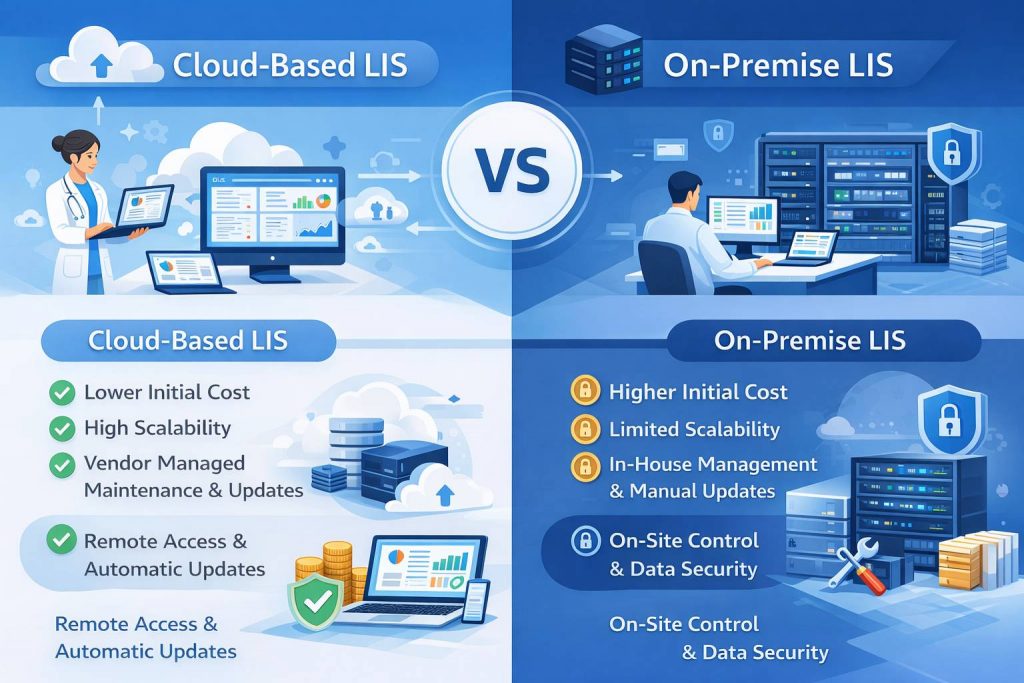
Choosing between cloud-based and on-premise LIS depends on a lab’s operational model, scalability needs, and compliance requirements.
| Feature | Cloud-Based LIS | On-Premise LIS |
|---|---|---|
| Initial Cost | Lower | Higher |
| Scalability | High | Limited |
| Maintenance | Vendor-managed | In-house |
| Accessibility | Anywhere | Location-bound |
| Updates | Automatic | Manual |
1. Cloud-Based LIS
Cloud-based LIS solutions offer flexibility, scalability, and lower upfront costs. They allow labs to access systems remotely, support multi-location operations, and receive automatic updates without managing infrastructure.
Best suited for:
- Growing labs and diagnostic chains
- Multi-location lab networks
- Labs seeking lower IT overhead and faster deployment
2. On-Premise LIS
On-premise LIS solutions are installed locally and provide full control over infrastructure and data. However, they require higher capital investment, in-house IT management, and manual updates.
Best suited for:
- Labs with strict internal IT control policies
- Facilities with limited internet access
- Organizations with existing IT infrastructure
3. Quick Summary
Cloud-based LIS is ideal for labs focused on growth, efficiency, and scalability, while on-premise LIS suits labs prioritizing complete on-site control despite higher maintenance efforts.
For most modern labs, cloud-based LIS offers better flexibility, scalability, and cost efficiency.
How to Choose the Right LIS for Your Pathology Lab
Selecting the right LIS is a strategic decision that impacts long-term efficiency and scalability.
Before selecting an LIS, consider:
- Lab size and daily test volume
- Compliance and accreditation requirements
- Integration needs with EHR, imaging, and devices
- Ease of use and staff training
- Vendor support and scalability
- Total cost of ownership
1. Current and Future Test Volumes
Choose an LIS that can handle present workloads while scaling seamlessly as test volumes increase.
2. Regulatory and Accreditation Needs
Ensure the LIS supports NABL, CAP, HIPAA, and other applicable standards with proper audit trails and compliance tools like Speedspath Lab Software.
3. Integration with EHRs and Lab Devices
A robust LIS should integrate easily with EHR systems, lab analyzers, imaging systems, and billing software to avoid data silos.
4. Ease of Use and Staff Training
An intuitive interface reduces training time and improves staff adoption, minimizing operational disruptions.
5. Vendor Reliability and Scalability
Select a vendor with proven healthcare expertise, reliable support, and a roadmap for future enhancements.
6. Total Cost of Ownership
Evaluate not just licensing costs, but also implementation, training, maintenance, and long-term scalability expenses.
Choosing the right LIS ensures operational stability, regulatory compliance, and sustainable growth.
Common Mistakes to Avoid When Implementing an LIS
Even the best LIS can fail without proper planning and execution.
- Choosing Software Without Scalability: Selecting an LIS that cannot grow with the lab leads to costly replacements later.
- Underestimating Staff Training Needs: Inadequate training results in poor adoption, errors, and resistance to change.
- Poor Planning for Data Migration: Incomplete or inaccurate data migration can disrupt operations and compromise historical records.
- Ignoring Integration Requirements: Failure to plan integrations with EHRs, analyzers, and billing systems creates inefficiencies.
- Prioritizing Cost Over Long-Term Reliability: Cheaper solutions may lack support, updates, and compliance readiness, increasing long-term risk.
Avoiding these mistakes ensures smoother implementation and faster return on investment.
Future Trends in Pathology LIS (2026 and Beyond)

Pathology LIS platforms are rapidly evolving beyond basic lab management.
- AI-Assisted Diagnostics and Reporting: AI tools support pathologists with pattern recognition, decision support, and report standardization.
- Predictive Analytics for Lab Optimization: Advanced analytics help labs forecast workloads, optimize staffing, and reduce bottlenecks.
- Increased Automation and Robotics: Automation in sample handling and processing improves efficiency and consistency.
- Greater Interoperability Across Healthcare Systems: Future LIS platforms emphasize seamless data exchange across hospitals, labs, and public health systems.
- Advanced Cybersecurity and Data Governance: Enhanced security frameworks protect sensitive health data in an increasingly connected ecosystem.
Modern LIS platforms are transforming into intelligent, data-driven lab ecosystems.
Expert Insight
With rising test volumes and stricter compliance requirements, pathology labs in 2026 need LIS platforms that are scalable, interoperable, and automation-ready. Cloud-based LIS solutions with strong EHR integration and analytics capabilities are emerging as the preferred choice for improving efficiency, compliance, and long-term operational resilience.
FAQs About Pathology Lab Information System (LIS)
Q. What is LIS in pathology?
An LIS is software that manages pathology lab workflows, data, samples, and reporting.
Q. Is LIS mandatory for pathology labs?
While not legally mandatory everywhere, LIS is essential for efficiency, compliance, and scalability.
Q. How much does a pathology LIS cost?
Costs vary depending on features, deployment model, and lab size.
Q. Can LIS integrate with EHR systems?
Yes, modern LIS platforms support HL7-based EHR integration.
Q. Is cloud-based LIS secure?
Yes, when built with proper encryption, access controls, and compliance standards.
Conclusion: Is a Pathology LIS Worth It in 2026?
Yes. A Pathology Lab Information System is essential for labs aiming to remain competitive, compliant, and patient-focused. By enabling automation, secure integrations, and real-time insights, an LIS transforms pathology lab operations and positions labs for future growth in 2026 and beyond.
If you’re planning to modernize your lab operations, investing in the right LIS is a strategic step toward sustainable growth.